
 843-518-1479
When winter arrives, your home’s heating system becomes a daily necessity. But what many homeowners don’t realize is that your comfort depends on more than just your furnace or heat pump—it also depends on the power grid. During extreme cold, energy usage spikes across entire regions like ours as millions of homes turn on heaters, electric space heaters, and other high-demand appliances.
Understanding how power demand affects your heating can help you avoid disruptions, protect your equipment, and know when to call a professional HVAC technician for support.
Why Power Demand Surges in Winter
Cold weather creates a perfect storm for increased energy use. Homes run heating systems longer, electric blankets and space heaters become common, and people spend more time indoors using lights, appliances, and electronics. In many areas, electric heat pumps and electric furnaces put an especially heavy load on the grid. Even gas furnaces rely on electricity to power ignition, blower motors, and control boards—so when electrical issues occur, heating can suffer.
When demand rises too quickly, utility companies may experience reduced voltage, localized outages, or strain on transformers and circuits. These conditions can create subtle but important changes in the way your heating system operates.
How High Demand Can Cause Heating Problems
One common issue during peak power demand is voltage fluctuations. When voltage drops or becomes inconsistent, HVAC equipment may not run efficiently or may shut down to protect itself. Heat pumps may struggle to maintain temperature, blower motors can operate less effectively, and control boards may reset unexpectedly. In some cases, homeowners notice rooms heating unevenly, a system cycling on and off, or a thermostat that seems out of sync with the home’s actual temperature.
High demand can also cause circuit overloads, especially in older homes. If you’re running a heat pump, plus multiple space heaters, plus kitchen appliances, your electrical panel may be pushed close to its limit. Breakers may trip, systems may lose power, and certain components—like the air handler or auxiliary heat—may stop working.
For homes that rely on heat pumps, winter power strain can be even more noticeable because heat pumps often switch to defrost mode when outdoor temperatures drop. Auxiliary heat is typically electric resistance heat, which draws significantly more electricity than the heat pump itself. During the coldest weather, this switch can drive energy use dramatically higher and increase the risk of electrical strain—both inside your home and across the grid.
How a Professional HVAC Technician Can Help
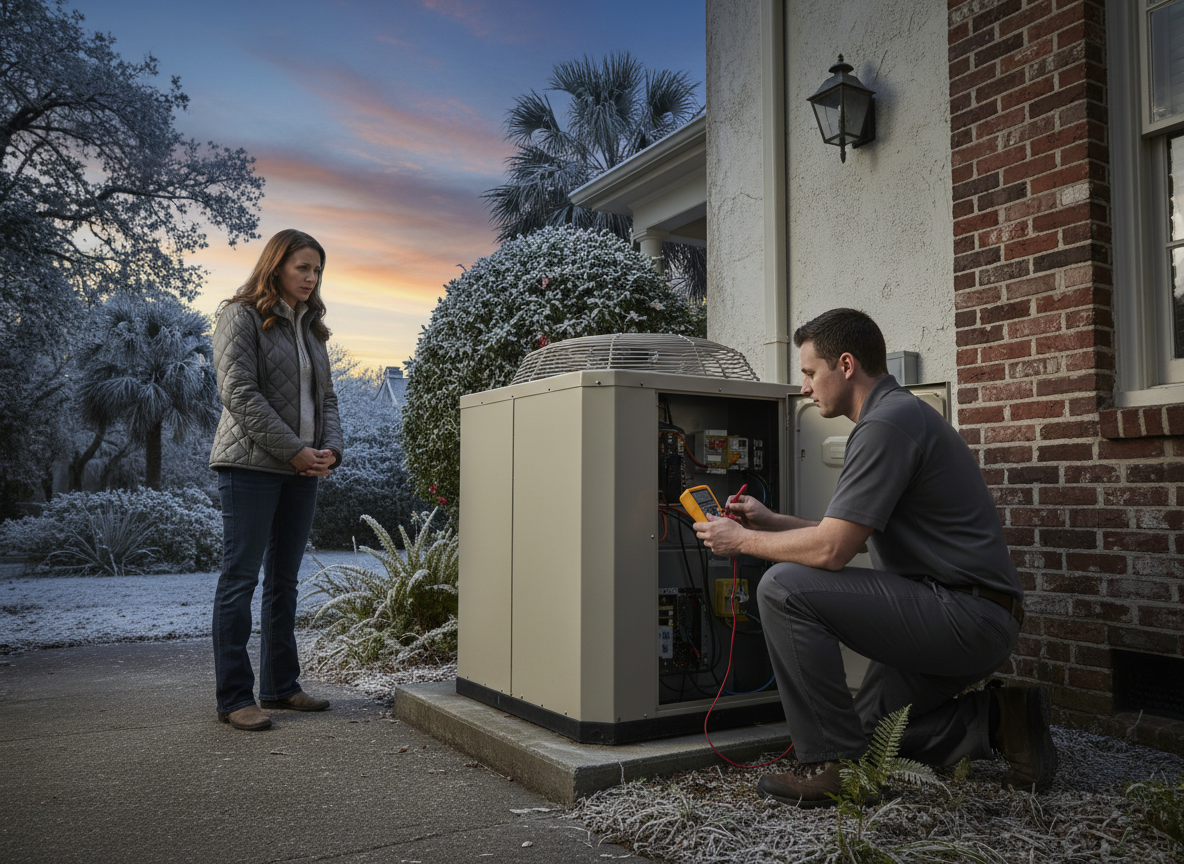
A licensed HVAC technician can diagnose whether heating issues are caused by equipment problems, electrical strain, or a combination of both. They can inspect electrical connections, test voltage, evaluate your blower motor and control board, and ensure your heat pump or furnace is operating properly under winter load. If your system is using defrost mode excessively, a technician can identify why—whether it’s low refrigerant, poor airflow, thermostat settings, or system age.
They can also recommend upgrades that reduce strain during peak demand, such as improved insulation, smart thermostats, system zoning, or a high-efficiency heat pump better suited for cold climates.
Go With 1st Choice A/C, Heating, Plumbing & Gas, LLC , Charleston’s 1st Choice in HVAC and Plumbing.
 Join Our Mailing List: